

Executive summary
The three "domes" mentioned in the report are not comparable systems. The Israeli Iron Dome is a short-range interceptor, Steel Dome is a Turkish national architecture now in delivery, while the Golden Dome is a US homeland initiative which remains a subject of ongoing debate regarding its architectural design, complete budget, and technical feasibility.
- Iron Dome (Israel)
Based on records, only Iron Dome has a substantial combat record. The 2026 Iran war has displayed that the layered system, not Iron Dome alone, carries the load, with interceptor stocks as the limit.
- Golden Dome (US)
The projected cost of the U.S. Golden Dome missile defense program spans a massive range, from $175 billion to $185 billion estimated by the White House and Pentagon, to $1.2 trillion over 20 years projected by the nonpartisan Congressional Budget Office (CBO), with some independent and congressional analyses warning costs could reach between $3.6 trillion and $6.2 trillion.
- Steel Dome (Türkiye)
The system links domestic radars, electronic warfare, guns, lasers and Hisar and Siper missiles under AI-assisted command. Erdoğan announced $24 billion in July 2026. The first integrated field exercise was in May 2026, with live intercepts unconfirmed at the moment.
Global Implications & Strategic Stability
Production Bottlenecks: The manufacturing capacity of Interceptors is the binding constraint globally, this raises the importance of affordable layers against drones and cruise missiles over primary interceptors.
Geopolitical Strain: The Golden Dome has created some complex issues with regards to strategic stability with Russia and China, turning allied participation into a bargaining chip for trade and territorial concessions.
Regional Dynamics (India & Pakistan)
India's framework is similar to the Steel Dome model rather than the Iron or Golden Dome. Rafael’s proposed Tamir production line links India directly to Iron Dome technology. Pakistan's increasingly dense, layered defense network demands ongoing evaluation.
Caveat: it is imperative to mention that the performance and cost data are primarily supplied by the developing or deploying parties; conflicting metrics are outlined in the contested-claims section.
Iron Dome (Israel)
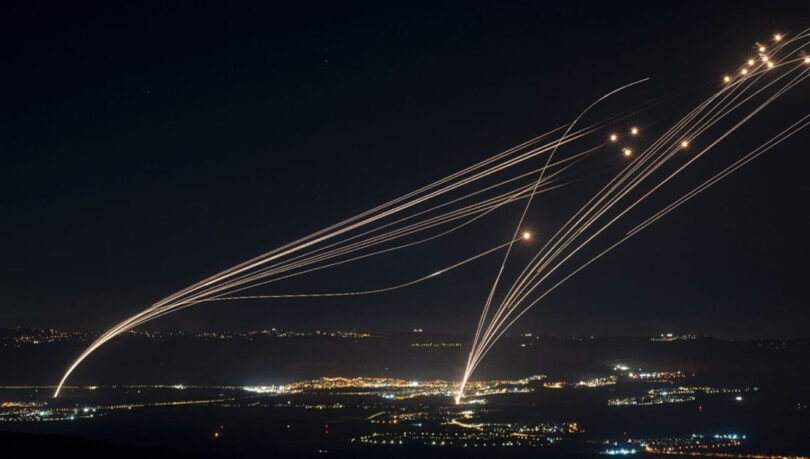
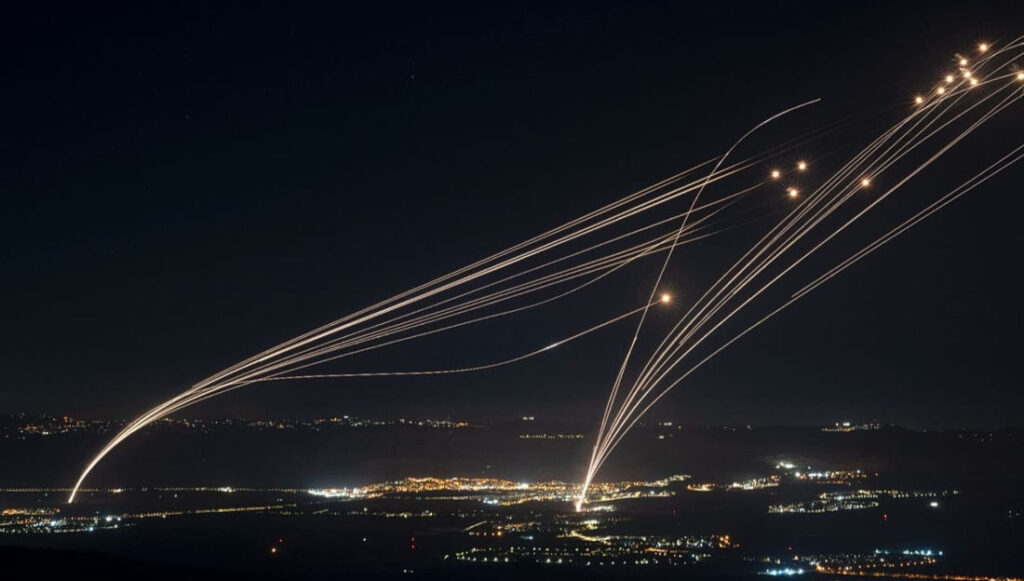
Iron Dome is Israel's short-range counter-rocket, artillery, mortar and drone interceptor and the lowest tier of its layered defence. It is the only one of the three systems with a long combat record, and the model the other two are measured against.
Iron Dome is developed by Rafael Advanced Defense Systems with IAI's Elta radar and the IDF. It was selected as Israel's response to short-range rockets in February 2007. A battery combines a radar, a battle-management center and launchers firing Tamir interceptors. It fires only at projectiles predicted to hit populated or sensitive areas, which is the source of its cost efficiency.
Iron Dome sits below David's Sling (medium range), Arrow 2/3 (long-range and exo-atmospheric ballistic defence) and the Iron Beam laser. Based on several reports, Iron Beam was used operationally for the first time against Hezbollah rockets in March 2026.
Per-interception figures vary widely by source with regards to cost: approximately $30,000, about $50,000 in Israeli media reports, and $100,000-150,000 in other estimates are reported. Higher-tier interceptors can be placed above $2 million each. A battery is put at roughly $50 million.
Combat record
- Rafael chairman Yuval Steinitz stated in May 2026 that the system achieved around 98-99% against Hamas and Hezbollah rockets since October 2023. Other outlets cite 90% or more.
- In the 2026 during Iran war the relevant figure is for the whole layered system, not Iron Dome alone. The IDF reportedly claimed about 92% for ballistic missiles as of 27 March, with 9 single-warhead hits and 30 cluster-warhead hits.
- In the June 2025 the IDF said 80-90% across the layered network, including allied assets.
United States link
The US bought two batteries in 2019. Raytheon and Rafael's R2S joint venture in Camden, Arkansas has delivered the first Tamir interceptor entirely built in the US. The Marine Corps' MRIC programme uses the Tamir (marketed as SkyHunter) with American radar and command-and-control, planned at 44 launchers and 1,840 interceptors.
Golden Dome (United States)
Golden Dome is a US homeland missile-defence programme, not a single system. It is still in development, its public architecture is thin, and its cost and scope are the most contested of the three.
Origin and mandate. A January 2025 executive order (first styled "Iron Dome for America") called for a reference architecture against missile threats "from peer, near-peer, and rogue adversaries". Trump announced a $175 billion plan in May 2025 and stated it would be finished within his term. Space Force Gen. Michael Guetlein runs it as a direct-reporting program manager.
As reported by the Pentagon
Guetlein stated on 17 September that the priority is defence against "a coercive decapitation or rogue nation attack", not a shield against Russia or China's full arsenals. He described two stages:
- By 2028: integrate existing sensors, interceptors and command systems against decapitation and rogue-state attacks.
- By 2035: add next-generation technology, including directed energy, new communications and sensing, and quantum.
The architecture spans space-based sensors (including HBTSS tracking satellites), ground-based interceptors (CBO's costed design builds on GMD, Aegis Ashore and THAAD; the Pentagon has not published its own list), and a command-and-control layer Guetlein calls "secret sauce", built by a consortium with Lockheed Martin, RTX and Northrop Grumman as primes.
Space-based interceptors (SBI)
Guetlein calls SBI the highest-risk element, "an economics, scalability problem" rather than physics. Twelve contractors cleared the first gate of a four-milestone prize competition in August, with flight tests due from 2027 and about $3.2 billion in prizes. Full production contracts follow only if the directorate judges SBI feasible.
Cost: two incompatible numbers
- Pentagon: $185 billion for the "objective architecture" through about 2035, up $10 billion in March to accelerate space capabilities.
- CBO (May 2026): $1.2 trillion over 20 years for a system that fully implements the executive order, including a 7,800-satellite SBI constellation costing $743 billion to counter a raid of 10 ICBMs.
- Guetlein says CBO is not estimating what he is building. AEI's Todd Harrison reads the $185 billion as implying SBI will be a minor part of the architecture, if it leaves demonstration at all.
Funding and politics
Congress provided $24 billion for missile defence in the July 2025 reconciliation act, including $5.6 billion for SBI. The FY2027 request adds $18 billion via reconciliation plus $68 billion in the regular budget, but Senate Majority Leader Thune has signaled another reconciliation bill is unlikely before the November midterms. At a late-September Senate hearing, Sen. Angus King said nationwide coverage was "not in the cards" and questioned as to who is protected and who is not.
Organization (October 2026)
JTF-Gold under NORTHCOM now also holds the cyber-defence mission. Officials have not settled which assets fall under it, and a planning sprint is set for late October. SpaceX's reported defence obligations reached $5.9 billion in FY2026 to date, up from $1.8 billion in all of FY2025.
Steel Dome (Turkey)
Steel Dome (Çelik Kubbe) is Turkey’s national layered air and missile defence architecture. It is a network of domestic radars, electronic-warfare systems, guns, lasers and missiles under one AI-assisted command layer, and is already being delivered to the armed forces.
Origin. The program was approved by the Defence Industry Executive Committee on 6 August 2024. after circulating internally as "Gökkubbe". It is framed as an architecture connecting existing and future systems, not a new weapon. Aselsan integrates and leads; Roketsan, Havelsan, Tübitak Sage and MKE supply missiles, software, guidance and munitions. The head of the procurement agency, Haluk Görgün, cited hundreds of subcontractors, many of them small and medium firms.
Layers ( publicly reported).
Layer | Systems | Notes |
Counter-drone and close-in | Şahin, Gökberk laser, İhtar jammer, Ejderha microwave | Directed-energy and electronic effects |
Very short range | Korkut guns, Sungur MANPADS, Gürz hybrid gun-missile-laser | Guns use programmable airburst ammunition |
Short to medium range | Hisar-A+ (about 15 km range, 10 km altitude), Hisar-O+ (over 25 km, about 15 km) | Main medium-range defence |
Long range and missile defence | Siper Block 1 (over 100 km, 20 km altitude); Block 2 planned at over 150 km, 30 km | Against aircraft, cruise missiles and short-range ballistic missiles |
Sensing and C2 | HAKİM command-and-control, RADNET, ALP radars, Puhu, Redet and Koral electronic warfare | Automatic threat assessment and weapon assignment |
Sources for the table: Warsight and Quwa. At SAHA 2026 the procurement agency announced contracts for Siper-A and Siper-4 ballistic-missile-defence layers; their performance has not been published.
Status.
- 27 August 2025: first major delivery, 47 vehicles worth about $460 million, including one Siper battery and three Hisar-O+ batteries.
- January 2026: Siper Block 1 entered service after acceptance testing that included discriminating friendly from hostile tracks.
- 20-21 May 2026: first integrated field deployment at exercise EFES. Quwa notes it is not confirmed that any layer made live intercepts, as opposed to coordinated tracking and cueing.
- Aselsan's CEO has set a target of more than 100 system-component deliveries in 2026. The $1.5 billion Oğulbey production base is meant to more than double capacity.
According to what is known, there is no single Steel Dome contract. The procurement agency reportedly signs piece by piece. Reported figures include $6.5 billion in contracts in November 2025, a €780 million (about $900 million) Aselsan deal in June 2026, and a €1.47 billion production contract in July. At the July 2026 NATO summit in Ankara, Erdoğan said Turkey had allocated an additional $24 billion. NATO also signed a $26.3 billion air and missile defence framework there. Its contents, including any Steel Dome interoperability or technology transfer, have not been published as of yet or known.
Strategic logic. Turkish officials have cited the Ukraine-Russia and Israel-Iran war as examples and analysts quoted by Breaking Defense link the architecture to hardening Turkey’s position, including deployments on Cyprus. The stated aim is also industrial, it is to make Turkey a net exporter of air defence.
Side-by-side comparison
Iron Dome is a proven weapon system, Steel Dome is an architecture of systems now being delivered, and Golden Dome is a program whose objective architecture is not public. Comparing them one-to-one overstates how alike they are.
| Iron Dome (Israel) | Golden Dome (US) | Steel Dome (Turkey) |
What it is | Short-range interceptor system: radar, battle management, Tamir launchers. Lowest tier of Israel's layered defence | Program to integrate homeland missile defence: space sensors, existing ground interceptors, command and control, plus experimental space-based interceptors | National architecture linking domestic radars, electronic warfare, guns, lasers and missiles under AI-assisted command |
Core threats | Rockets, artillery, mortars, drones, cruise missiles | Stage 1: decapitation and rogue-state attacks. Longer term: ballistic, cruise and hypersonic | Drones, cruise missiles, aircraft, short-range ballistic missiles |
Coverage logic | Selective: engages only projectiles headed for populated or sensitive areas | Homeland, but officials and experts concede nationwide coverage is not realistic | National territory and forces, layered by range and altitude |
Status, 21 Oct 2026 | Operational since 2011; US Marine Corps variant tested | In development. Stage 1 by 2028, Stage 2 by 2035; space-interceptor flight tests from 2027 | Components in service since 2025; first integrated field exercise May 2026 |
Combat record | Extensive. Claims of 90-99% on rockets; layered system about 86-92% against Iranian missiles (claimed) | None. A directed-energy demonstration against drones and cruise missiles on 23 June | None as an integrated system; live intercepts at the May exercise unconfirmed |
Cost | $30,000-150,000 per interception depending on source; about $50 million per battery | $185 billion (Pentagon, to about 2035) against $1.2 trillion over 20 years (CBO) | $24 billion announced; $6.5 billion contracted Nov 2025; no single programme budget |
Lead industry | Rafael, IAI Elta; Raytheon co-production | Lockheed Martin, RTX, Northrop Grumman on command and control; SpaceX and others | Aselsan, Roketsan, Havelsan, Tübitak Sage, MKE |
Space layer | None | Central and most contested | None publicly stated |
Main open question | Interceptor depletion and cost exchange in long, saturating raids | Cost, feasibility, classified architecture, effect on strategic stability | Integrated performance, NATO integration terms, funding transparency |
Countries and their positions
Israel, the United States and Turkey own the three systems. A wider set of states has either joined, bought into or copied the "dome" model, and the two largest nuclear rivals of the US have condemned it.
Country | Role or programme | Status as reported |
Israel | Iron Dome, plus David's Sling, Arrow and Iron Beam | Combat-proven; Rafael is in talks to produce Tamir interceptors in India and has a US plant |
United States | Golden Dome; also co-produces Iron Dome's interceptor (SkyHunter for the Marines) | Golden Dome in development; Space Force, NORTHCOM and Army units are being assigned |
Türkiye | Steel Dome | Deliveries under way; $24 billion pledged at the July 2026 NATO summit |
Canada | Talks on joining Golden Dome through NORAD | Trump said the price would be $61 billion, or nothing as a 51st state; a defence ministry spokesperson says Canada will participate only if right for both parties |
Japan | Intends to join Golden Dome | Reuters reported in March that Tokyo would tell Washington it wants in; participation details unclear, with a possible US request for Japanese missile production |
Denmark and Greenland | Trump cited Golden Dome cooperation in a January 2026 Greenland "framework" | Frederiksen said Denmark is open to dialogue if territorial integrity is respected |
Germany and the European Sky Shield Initiative | Arrow 3 as upper tier, with Patriot and IRIS-T below | Arrow 3 commissioned at Holzdorf in December 2025, the first Arrow outside Israel; France has argued for European-made systems |
Taiwan | T-Dome, announced by Lai in October 2025, concept drawn from Iron Dome | Legislature approved a reduced NT$780 billion special budget in May against NT$1.25 trillion sought; the indigenous Chiang-Kong anti-ballistic missile was left out and the program may slip to 2028 |
India | Mission Sudarshan Chakra, announced 15 August 2025, target 2035 | Components tested. phase timings differ by source |
South Korea | Domestic Iron Dome-type low-altitude interceptor (LAMD) against North Korean artillery | 479.8 billion won budgeted to 2028 |
Saudi Arabia, UAE and other GCC states | Patriot and THAAD core, under sustained Iranian fire since late February 2026 | Heavy interceptor use; JINSA estimates the UAE and Bahrain expended over three-quarters of PAC-3 stocks; the US advanced a $23 billion package for the UAE, Kuwait and Jordan |
Pakistan | Chinese-supplied HQ-9 and HQ-16; reported interest in HQ-19 | HQ-19 reports come from a single regional outlet chain and are unconfirmed |
China and Russia | Opponents of Golden Dome | Joint statements in May 2025 and on 20 May 2026 call it a threat to strategic stability |
Two threads cut across the table. First, the Gulf war made interceptor supply the binding constraint for every Patriot and THAAD user, which is why Tamir and Siper production lines are suddenly strategic assets. Second, Golden Dome participation is being negotiated alongside trade, territory and burden-sharing, not on technical merit alone: Canada's price tag, Japan's reported use of it as a bargaining chip in trade talks, and Greenland.
Strategic implications for other nations
- "Dome" now covers three different strategic logics. Iron Dome is tactical cost-exchange defence of populated areas. Steel Dome is sovereign integration and industrial scale-up of ground-based air defence. Golden Dome is strategic homeland defence with a space layer. Taiwan, India and Europe's Sky Shield borrow the label but face different threat sets and budgets, so the transferable lessons differ by case. Assessment: the branding is doing political work (deterrence signalling, budget advocacy) as much as describing architecture.
- Interceptor depth, not technology, fails first.
Al Jazeera reported that Iran imposes costs by keeping air defences on constant alert and depleting stocks, and the Gulf data above bears that out. The response is evident in the industrial moves: Rafael-Raytheon's Arkansas line, Rafael's India talks, Japan's expected request to produce missiles for the US, and Turkey’s $1.5 billion Oğulbey base. The states without domestic interceptor production will face a supplier-dependence problem that outlasts any particular war.
- Cheap layers matter more than the headline interceptor. Steel Dome's guns with programmable airburst ammunition, lasers, microwave weapons and electronic warfare, and India's IADWS laser, are aimed at the drone and cruise-missile volume that makes missile-for-missile defence unaffordable. The Iron Dome precedent supports this. Its economics depend on engaging selectively, and the layer above it costs more than $2 million per missile.
- Strategic stability is the live cost of Golden Dome. Beijing and Moscow's May 2026 statement calls the program an "obvious threat to strategic stability" and ties it to the lapse of New START. Counter-arguments also exist. CSIS has highlighted both views, and Guetlein's stated priority of decapitation and rogue-state attacks is narrower than the executive-order language the Sino-Russian statement quotes. The gap between the classified architecture and the executive-order text lets adversaries plan against the broader reading, which can present to be far more dangerous for third countries sitting between nuclear powers.
- Alliance bargaining is attached to the technology. Canada's price, Japan's trade leverage and Greenland all show Golden Dome being negotiated as part of wider US bargaining. Turkey shows the opposite pattern. A NATO member building a sovereign architecture while also signing a NATO air and missile defence framework, with contents unpublished.
- Regional blocs may become channels for air-defence technology. Saudi Arabia, Turkey and Pakistan signed the Mecca Joint Defence Agreement on 7 August 2026, an attack on one is attack on all pact, and their defence ministry statements stress joint production and technology exchange.
India
Mission Sudarshan Chakra, announced 15 August 2025 with a 2035 target, is an umbrella for existing assets (S-400, Akash, Barak-8, Akashteer/IACCS) and new ones: DRDO's IADWS (QRSAM, VSHORADS and a 30 kW laser, first tested 23 August 2025) and Project Kusha, whose three long-range SAMs are due by 2028 with induction from 2030.
Comparisons that fit
- Steel Dome is the closer analogue than Iron Dome or Golden Dome. Both are sovereign, layered, networked architectures built largely from existing and near-term systems under one command layer. The difference visible from outside is procurement tempo: Turkey has published delivery ceremonies and contract values piece by piece, while India's contracting is far less visible. Steel Dome's integrated performance is still unproven, so it is a model for structure, not yet for results.
- Iron Dome is a component lesson, not a template. Swarajya magazine argues India faces nuclear-armed adversaries, hypersonics and a subcontinent-scale battlefield that Iron Dome never had to address. The relevant import is the Tamir interceptor. Rafael is in talks to build Tamir in India, in the context of the February 2026 Special Strategic Partnership.
- The Golden Dome initiative carries critical secondary consequences:
- Heightened Regional Threats: Chinese and Russian strategic pushback will inadvertently aggravate India’s northern security challenges.
- Strained Supply Chains: Simultaneous demand from the Golden Dome and operations in the Gulf will likely bottleneck the U.S. interceptor industrial base, extending lead times for American-made defense systems.
Contested claims and source discrepancies
Iron Dome success rate | 98-99% against Hamas and Hezbollah rockets (Rafael chairman Steinitz, May 2026); over 90% (Israeli statements via AP); 97% (cited by +972 Magazine) | All are Israeli or manufacturer figures; no independent audit. Rates depend on how "engaged" targets are counted, given selective engagement |
Layered defence against Iran | IDF: about 92% of ballistic missiles as of 27 March 2026, with 9 single-warhead hits and 30 cluster-warhead cases; IDF in June 2025: 80-90% including allied assets; AJC: 86-90% | CEPA's Borsari says Israeli data is fragmentary and a high-confidence assessment is difficult. These figures are for the whole layered system, not Iron Dome alone |
Iron Dome cost per interception | About $30,000; about $50,000; $100,000-150,000 | Estimates differ by source and by year. |
Golden Dome cost | $175 billion (Trump, May 2025); $185 billion (Guetlein, March 2026); $1.2 trillion over 20 years (CBO, May 2026); CBO's 2025 space-interceptor range of $542-831 billion; AEI's high-end $3.6 trillion | The Pentagon says the outside estimates price a different architecture. AEI's Harrison says the $185 billion excludes long-term operation and replenishment. CBO says it got its first Golden Dome briefing only days before a late-September hearing |
Golden Dome timeline | Complete within Trump's term (by January 2029); Stage 1 by 2028 and Stage 2 by 2035 (Guetlein); demonstrated operational capability by summer 2028 | The executive order set no due date; a December 2025 order asked for next-generation prototypes by 2028. "Operational" has not been defined publicly |
Steel Dome contract totals | $6.5 billion (Nov 2025, per Wikipedia and Warsight); $1.9 billion (Sept 2025), €780 million (June 2026) and €1.47 billion (July 2026) per Quwa; €2.46 billion in October 2026 (Quwa headline, not opened) | Contracts are signed piece by piece and the sources may be counting overlapping packages. The $24 billion is an announced allocation; how much is new money is not stated in the sources. |
Steel Dome performance | Official descriptions of AI-assisted command and an integrated shield | Quwa notes live intercepts at EFES 2026 are unconfirmed. Siper Block 1's 100 km range was reported validated in testing; Block 2 and Siper-A/4 figures are plans |
Steel Dome unveiling date | One source page shows 15 May 2026 while its address shows July 2025 | I treat the system's public unveiling in this form as mid-2025; formal approval was 6 August 2024 |
India's S-400 aircraft kills in May 2025 | IAF chief: longest recorded surface-to-air kill and Eurasian Times reports six aircraft; The Wire reports "reportedly" five | Official claim, not independently verified. |
Sudarshan Chakra timing and cost | Phase 1 by 2028-29 (one analysis); "potentially operational by 2030" (IDRW); full shield by 2035; $10-15 billion (IDRW sources) | Cost and phase dates come from analysts and defence blogs, not official documents |
Reported HQ-19 deal for Pakistan | "Considering" (Defense Post, June 2025); "impending induction" and a $12 billion figure (Defence Security Asia) | Not confirmed by either government. |
How the sources differ in kind. The Golden Dome picture rests mostly on Arms Control Association, Defense One, Axios and Breaking Defense reporting of hearings and conference remarks. Steel Dome relies heavily on Aselsan and procurement-agency statements relayed by trade outlets such as Quwa and Warsight, with limited independent verification. For Iron Dome, the best-sourced numbers are the least independent.
More on dome defense systems:
The “Golden Dome” Missile Defence Initiative: Ambitions, Components, and Challenges: https://www.thestrategicperspective.org/the-golden-dome-missile-defense-initiative/
Turkish Steel Dome to rival Israel’s Iron Dome: https://www.thestrategicperspective.org/turkish-steel-dome-to-rival-israels-iron-dome/
EFES 2026: Steel Dome, Syria and 50 Nations: https://www.thestrategicperspective.org/efes-2026-steel-dome-syria-and-50-nations/
Managing Autonomous Warfare: https://www.thestrategicperspective.org/managing-autonomous-warfare/
BrahMos Fire Control Systems and Launchers for the Indian Navy: https://www.thestrategicperspective.org/brahmos-fire-control-systems-and-launchers-for-the-indian-army/
Regional Responses to FZ1073: Cooperation Amid Diplomatic Tension: https://www.thestrategicperspective.org/regional-responses-to-fz1073-cooperation-amid-diplomatic-tension/