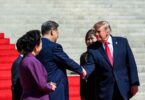

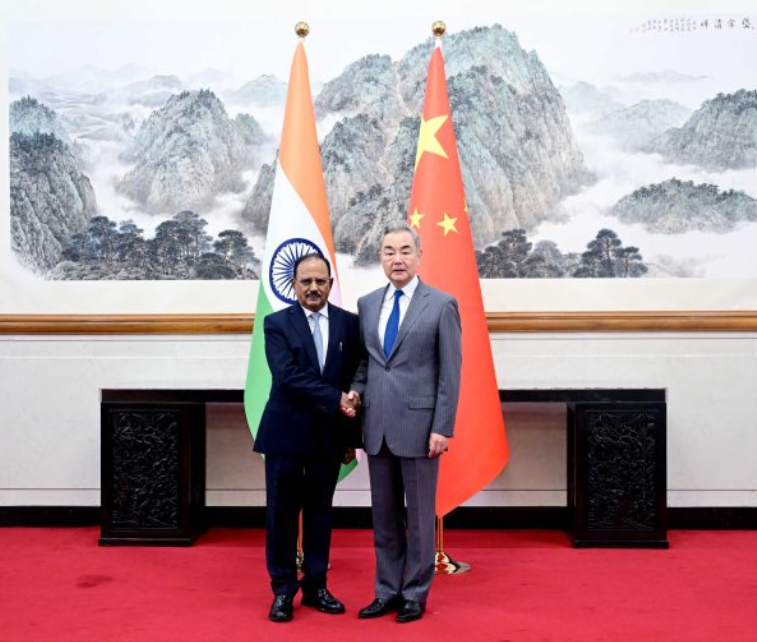

The 25th round of boundary talks (since 2014) between India’s NSA Ajit Doval and Chinese Foreign Minister Wang Yi, Special Representatives (SR) of India and China, were held in Beijing on August 25, 2026. Before the talks, Indian propagandists posted their pictures on Meta with the caption: “Something Big is Happening – POK Will Be Ours”.
Following events concurrent to the above talks are noteworthy:
- Ground reports of China's PLA blocking Indian forces access to key patrolling points in Taksing, Upper Subansiri district of Arunachal Pradesh (https://arunachaltimes.in/article/chinese-pla-encroaching-on-indian-territory-near-taksing-claims-group); Chinese pressure tactics before the boundary talks and the BRICS Summit.
- Devastating flash floods in Nepal triggered by China’s ecological experiment – a military tool of its ‘Unrestricted Warfare’, which is why China gave no advance warning to Nepal; view a Chinese helicopter flying in the area (https://www.instagram.com/reel/DciJct_yls1/). Nepali journalists accuse Chinese construction activities in border region triggering flash floods (https://www.wionews.com/world/nepal-rusuwa-flash-flood-china-construction-allegations-1787848288918). This is also a China’s Water Bomb signal to India.
- Bangladesh is actively considering joining the Mecca Defence Agreement. The country is heavily dependent on Chinese military hardware and infrastructure investments. This plus China's economic influence with the Mecca military framework creates a deeply complex security challenge where Turkey's defence technology, Saudi money, and Pakistan’s military apparatus converge on India’s border.
- Unusual surge in Chinese and Turkish military aircraft landing at Nur Khan, Masroor and Murid PAF bases – suspected deliveries of military hardware, drones, loitering munitions, counter-drone tech, and air defence components.
As for boundary talks, China historically uses dialogue to freeze ground realities in its favour while altering the status quo on the Line of Actual Control (LAC) through salami slicing. China has always sought to decouple the border issue from economic ties, pushing India to open its markets to Chinese trade despite the ongoing trust deficit.
Elaborating on the SR talks of August 25, the Chinese statement says, “The two sides engaged in-depth communication on advancing boundary negotiations, strengthening border control, improving institutional mechanisms, and promoting cross-border cooperation, and reaffirmed that, in accordance with the political guiding principles reached in 2005 and in the spirit of mutual respect and mutual understanding, they will make use of the Special Representatives' meeting mechanism to seek a fair, reasonable, and mutually acceptable package solution to the boundary issue”. Wang Yi urged India to place the boundary question in an "appropriate position" within the relationship rather than letting it dominate everything. Beijing pushed for a long-term strategic perspective, promoting the idea of the "Dragon-Elephant Dance" and economic normalization.
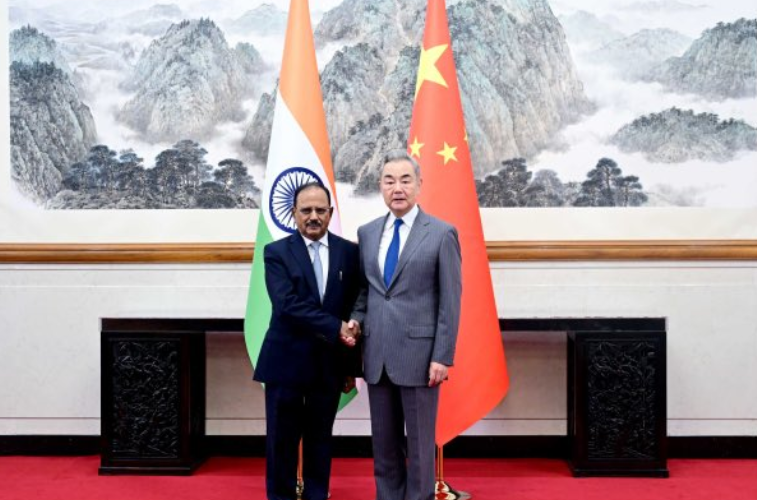
The Indian Readout strongly emphasized that the return to normalcy in overall bilateral relations is explicitly tied to maintaining peace and tranquillity along the border areas. New Delhi remains focused on a complete resolution at the LAC as a prerequisite for broader cooperation. Breaking away from past practice, the MEA and China later released a rare joint text outlining eight agreed-upon outcomes. This included working toward an "Early and Substantial Harvest" of boundary delimitation, implementing new military hotlines in the eastern and middle sectors, and resuming border trade and the Kailash-Manasarovar pilgrimage.
In a supplementary statement on August 26, the MEA outlined Eight Points of Outcomes and Consensus for the 25th round of Talks between SRs India and China on the Boundary Question. The Statement does not mention the package solution referred to in the Chinese Statement but has highlighted that the “Expert Group on Boundary Delimitation and Working Group on Border Management under the WMCC would respectively advance discussions on an Early and Substantial Harvest of boundary delimitation and Border Management”.
Apparently, the proposals for “Early Harvest,” discussed during the WMCC meetings have been shelved while the “Package Deal,” is back on the table. This is evident from the Chinese Ministry of Foreign Affairs Read out of the meeting, though the Package Deal finds no mention in the Indian Ministry of External Affairs Statement. In recent meetings of the WMCC, the statements read that the two sides will, “explore Early Harvest in boundary delimitation in the India-China border areas.”
China's current focus on boundary delimitation and an early harvest could be a piecemeal strategy to settle easier, less strategic parts of the border first, while leaving crucial friction points unresolved. Witness how China forced India to vacate its posts on Ladakh Range in 2020, to India’s strategic disadvantage, while there has been no discussion on de-escalation and thus de-induction of troops from the LAC in Eastern Ladakh.
It may be argued that border talks are a necessary stabilization mechanism ahead of high-level summits; concrete outcomes, like new military hotlines, additional border meeting points, and data-sharing on trans-border rivers provide tangible confidence-building measures to prevent active military miscalculations. There is no denying this, but this has also been the norm for the past so many years.
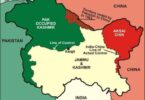
The “Package Deal” was first announced as per the Agreement on Political Parameters and Guiding Principles, signed on April 11, 2005, wherein Article III envisaged “a package settlement” covering all sectors of the India-China boundary; stating, “Both sides should, in the spirit of mutual respect and mutual understanding, make meaningful and mutually acceptable adjustments to their respective positions on the boundary question, so as to arrive at a package settlement to the boundary question. The boundary settlement must be final, covering all sectors of the India-China boundary”. Nothing having happened in the last 21 years, some analysts view the package deal possibly implying India and China accepting a compromise on Aksai Chin and Arunachal Pradesh respectively. But such a deal will have deep political implications on both sides, especially in India, and is hardly workable. Even in the unlikely event of the Aksai Chin-Arunachal Pradesh swap working out, will China forgo its claims on Ladakh and in the Middle Sector?
India maintains a policy of conditionality; meaning trade and diplomatic normalisation cannot happen unless the border is peaceful. China wants to decouple the two, keeping the border issue on a slow, managed burner while pushing for immediate economic engagement to tap into India's market. While the joint statement accepts "boundary delimitation" based on the 2005 Political Parameters, both sides interpret the timeline differently. India seeks a comprehensive, clear delineation to prevent regular Chinese incursions, whereas China prefers strategic ambiguity along the un-demarcated LAC to leverage it whenever necessary.
Finally, one must be downright stupid to think that China holding all the aces will give up its claim to 90,000 sq km of Arunachal Pradesh, whole of Ladakh and claims in the Middle Sector, in exchange to giving Aksai Chin (roughly 38,072.83 sq km) to India where PLA maintains 50,000-60,000 troops during high-alert phases, through which passes the China National Highway 219 (G219), and the second major expressway China is constructing through Aksai Chin (G695 National Expressway) is to touch Galwan and Hot Springs in Eastern Ladakh by 2035? Not without reason Wang Yi is called “Silver Fox”. Je has served another smart googly – akin to a bucket-full of live frogs for Doval to gulp down. The WMCC can continue discussing the overall border settlement for the next few decades, with our diplomats applauding good progress being made, while China enters Indian markets with renewed vigour.
The author is an Indian Army veteran, Views expressed are personal.