
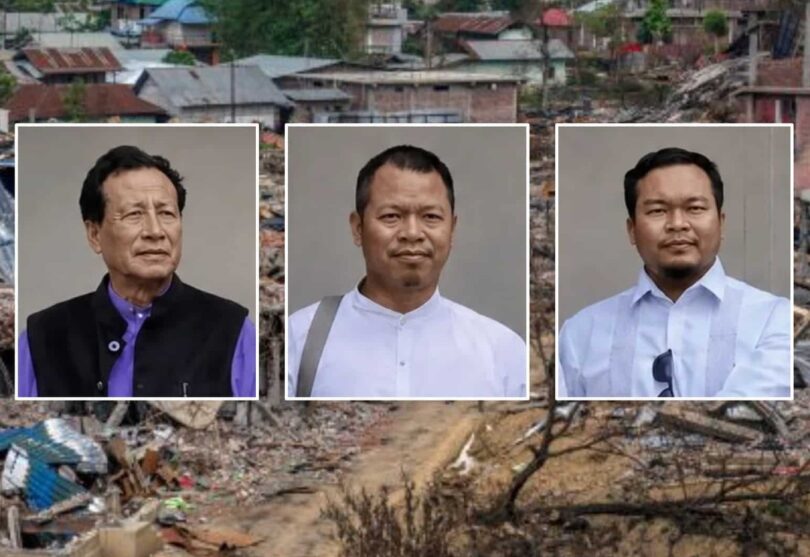
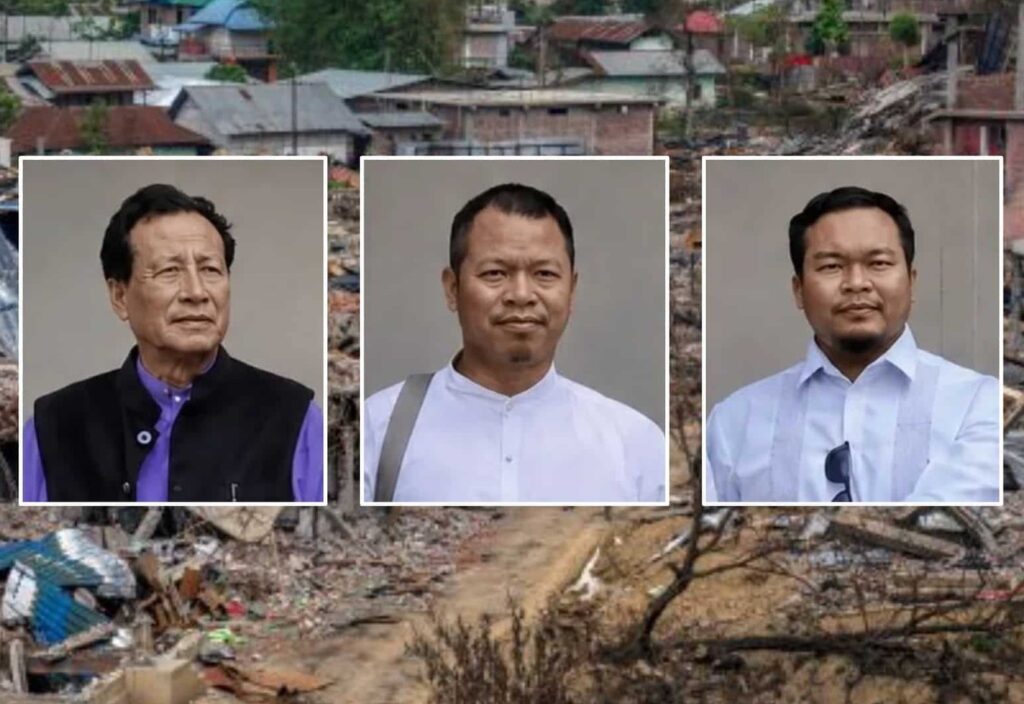
Manipur continues to bleed. On May 13, 2026, three Baptist pastors and their driver were killed in an ambush in Kangpokpi district, Manipur. The group was traveling back to their native place in Kangpopki after attending a church gathering in Churachandpur. A day after the killings of these three Baptist pastors, reports emerged of at least 38 people from the Naga and Kuki-Zo communities were held hostage by rival at locations across Manipur’s hill districts. On July 1, 2026, around 20 houses were set on fire at Phaimol village, a Kuki-Zo settlement in Kamjong district close to the India-Myanmar border. In another incident, militants torched around eight houses in Kongkan in the same district near the international border. Kuki and Naga organisations have been accusing each other of violence.
According to news reports of July 3, security forces arrested a 45-year-old cadre of the banned Meitei terrorist organization People’s Liberation Army (PLA) from Sanjenbam Khullen in Imphal East district and a 44-year-old cadre of the of the banned Meitei terrorist organization People's Revolutionary Party of Kangleipak (PREPAK) from Nagamapal Kangjabi Leirak in Imphal West district on the same day. In another operation, the police seized a cache of arms, explosives and ammunition from the Wakha Ching area in Imphal East district. Security forces have been conducting search operations and area domination in the fringe and vulnerable localities across Manipur since ethnic violence broke out three years ago. Some 300 people have been killed, hundreds injured and thousands rendered homeless in the ethnic strife.
Protests against ‘economic blockade’ in Manipur have escalated with Kuki groups trying to enter the buffer zone; border between Kangpokpi and Imphal West districts, demanding the restoration of the supply of essential commodities along National Highway-2 into Kangpokpi, and security forces using tear gas to disperse the agitating crowds. This comes amid a month-and-a-half-long ‘economic blockade’ by Naga groups, blocking the entry of goods and supplies into Kuki-Zo areas. The Centre or the State has taken no action against Nagas blocking the national highway. Incidentally, Union Home Minister Amit Shah had said in 2025 that all roads should remain open.
On July 4, Chief Minister Yumnam Khemchand Singh visited Kuki-majority Churachandpur by helicopter (first visit to Churachandpur by a CM since violence broke out in May 2023) to attend BJP MLA Vungzagin Valte’s burial (who was on ventilator for 3-years) amid boycott calls by Kuki organizations. On July 5, two gunmen (suspected Nagas) opened fire in Thingkhongjang village in Kanglapoki district, injuring two, including an 8-year-old girl. 2-3 houses were also set on fire in the incident.
When Manipur imploded in engineered violence on May 3, 2023, the then Chief Minister N Biren Singh’s actions that turned Manipur from a peaceful border state into anarchy and bloodletting, including focused ethnic cleansing, was covered in these columns earlier (https://www.thestrategicperspective.org/op-eds/visual-composer-1657/). For the Centre, he was the goose that laid golden eggs (annual narcotics estimated at INR 50,000 crore in 2024) and ready to clean out Kuki-Zo from the 6,000 hectares of land promised to corporates who had already paid advance, aside from other reasons. But Manipur is not Ladakh where Sonam Wangchuk could be jailed and corporate given the land before releasing Wangchuk. Kuki-Zo were ready to fight back amid accusations they are immigrants, whereas, they have been inhabitants of Manipur over the past several decades.
For attacking Kuki-Zo, Biren Singh used armed Meitei groups like the Arambai Tenggol (AT), as well as Manipur Police commandos operating directly under him. The leader of Arambai Tenggol, Korounganba Khuman (alias Tyson Ngangbam) is erstwhile driver-cum-security officer of BJP Rajya Sabha MP Leishemba Sanajaoba. Biren Singh not only organized the expansion and arming of AT, their grand entry into Imphal City (captured on video) by keeping Manipur Police off the streets, but also allowing them to muster all MLA’s (and even a Union Minister of State) to administer an oath of allegiance. Looting of weapons (6,500+) and ammunition (6,00,000 pieces) from Police and IRB armouriesd was organized and were distributed to Meitei insurgents, as reported by sources on ground. In addition, a sustained campaign was organized against the Assam Rifles and the Army using local Meitei women.
On June 24, 2023, 12 x Kanglei Yawol Kanna Lup (KYKL) terrorists (including self-styled Lt Col Moirangthem Tamba alias Uttam) apprehended by the Army, with arms, ammunition and warlike stores, were forced to abandon the operation and hand over the KYKL terrorists to a mob of about 1200-1500 led by a local politician in the Biren Singh regime. KYKL is a Meitei terrorist organization. Tamba alias Uttam is the mastermind of the KYKL terrorist ambush on a convoy of 6 DOGRA on June 4, 2015, killing 18 personnel of the unit. View this in backdrop of our cries at the UN and international forums for bringing to justice Pakistani terrorists and perpetrators for terror attacks in India.
On February 9, 2025, Biren Singh was forced to resign because a number of BJP MLAs were also part of the coalition seeking the no-confidence motion against him (https://www.thestrategicperspective.org/op-eds/voodoo-man-of-manipur/). Yet, Biren Singh was appointed “acting” Chief Minister with inputs that his replacement would take three to four months. But Manipur got another elected government only after a lapse of 12 months, since President's rule was imposed in Manipur from February 13, 2025, to February 4, 2026. Biren Singh (Centre’s blue-eyed boy) continued to spearhead the anti-Kuki campaign and was visible at the time of installation of the new government.
There had been isolated incidents of attack on Nagas in the Imphal valley sector – amid Naga apprehensions they would be in the crosshairs after Kukis. But the Meitei-Kuki conflict was being viewed globally as India’s ethnic cleansing of Christians. Therefore, the following measures were adopted:
- Tribal politicians joining the present Manipur government (Deputy Chief Minister Nemcha Kipgen, along with MLAs LM Khaute and Ngursanglur Sanate) invited intense backlash by apex bodies like the Kuki-Zo Council (KZC) and Kuki Inpi Manipur (KIM) as a betrayal of Kuki community; and in-line with BJP’s norm of “purchasing” lawmakers.
- Thousands of Bnei Menashe community members in Northeast India are being relocated to Israel under Operation ‘Wings of Dawn’, which has already commenced. The remaining 6,000 community members in Manipur and Mizoram are to move to Israel by 2030. Bnei Menashe are an ethnic Mizo, Kuki, and Chin minority in India who identify as descendants of one of the ‘Ten Lost Tribes’ of ancient Israel.
- To appease Tel Aviv further, India is sending up to 50,000 Indian workers to Israel over the next five years.
- The US is happy with India providing transit through the northeast for Western mercenaries to arm and train anti-government forces in Myanmar.
- In February 2026, an agreement was signed to establish the Frontier Nagaland Territorial Authority (FTNA) for six eastern districts of Nagaland; transferring powers of 46+ subjects to the FNTA for economic and developmental powers.
- The above was followed by the Assam-Nagaland Border & Oil Exploration Pact; between the Centre, Assam, and Nagaland – enabling crude oil and natural gas exploration with 50:50 resource-sharing.
The above two most significant deals engineered by Union Home Minister Amit Shah concerning Nagaland involving resource-sharing disputes with Assam and granting administrative autonomy to eastern Nagaland are considered a masterstroke: having repercussions throughout northeast India, including sidelining the Kuki-zo in deliberate fashion.
The Kuki-Naga conflict is age old; fight over land, tribal sovereignty, carving out an autonomous homeland, control of narcotics, and the like. But revival of the Naga-Kuki armed conflict during the 1990s that claimed more than a thousand lives and displaced entire villages before dying down, is being credited to Amit Shah – which may have been discussed with Nagas at the time of signing the pacts. The advantage is that Manipur is no more viewed as only a Hindu-Christian (Meitei-Kuki) fight, but also a Christian-Christian (Naga-Kuki) fight. With Naga and Kuki attacking each other, the question of granting a Tribal Territorial Authority in Manipur is dead. And, if the Meitei-Nagas can help the state wipe out with the Kukis, Nagas can hope for a FTNA in Manipur as well.
Manipur appears destined to burn, more than when Modi visited the state for 3-hours (including a road show) after 29-months of ethnic violence that killed some 300, injured 1,500+ and displaced 67,000. The Centre instituted the Commission of Inquiry into the Manipur violence on June 4, 2023.The panel is now headed by former Supreme Court judge Justice Balbir Singh Chauhan, who took over on March 1, 2026, following the resignation of former Gauhati High Court Chief Justice Ajai Lamba. The commission’s tenure is extended to November 20, 2026. Having already missed five deadlines on September 13 (2024). December 3 (2024), May 20 (2025). December 16 (2025) and May 20 (2026), the drama can be expected to continue endlessly or eventually brushed under the carpet like the Manipur Tapes that would effectively indict N Biren Singhj. Ironically, not a single individual has been convicted for murder, arson, or even public rape of tribal women in broad daylight since May 2023. The economic blockade of Kuki-Zo, aided by the Nagas, is continuing.
The centre and State appear quite happy with the current state of affairs. But happiest is China which supports, arms and even selectively trains Naga, Kuki and Meitei armed insurgent groups in Myanmar and northeast India. It is quite apparent that the effort of the state government of having a joint dialogue with the Kuki and Naga was dramatics, which now appears impossible having revived the Naga-Kuki armed conflict. But the need of the hour is to provide greater autonomy and administrative decentralisation to both the Naga and the Kuki, in addition to the Meitei. Buffer Zones and economic blockade within India are no solution, which cement the strife further. Finally, the question is does the nexus between politics, policing and militant groups want and permit peace in the first place?
The author is an Indian Army veteran. Views expressed are personal.